Following is my abstract for our college’s concluding conference on Technological and Aesthetic (Trans)Formations of Society in October. Writing this has renewed my good feelings and motivation for this conference.
Terminals are places of modernity, of transport and communication. They are portals to the city, places of representation and power, but they are also places of deviance, decline and seduction. In this presentation, I will look at the polished stone, steel and glass surfaces but I will also look into the shadows and plumb the depths of these places. How do they interact with the people that use them? The aesthetics of the things, the technology and the architecture of railway and ferry terminals is perceived by women and men who use these places. Entering these places, people change direction, speed and mood. To capture and analyze these changes, happening in the crucial moment of entering a place, I want to introduce the term encapsulation (Einhhüllung).
With the aid of digital video recordings the different aspects of the process of encapsulation will be explored and displayed for consideration and critique. Encapsulation is projected as phenomenologically rooted term that has both passive and active components. Passive, because people are encapsulated by a specific, preexistent atmosphere when they enter a place. Active, because people encapsulate or envelop themselves when they enter a place. They build up a protective cover around them, to shield them from potential dangers and irritations. Confronting the abstract analytical term encapsulation with concrete everyday life in railway and ferry stations should demonstrate both its productivity and its limitations.
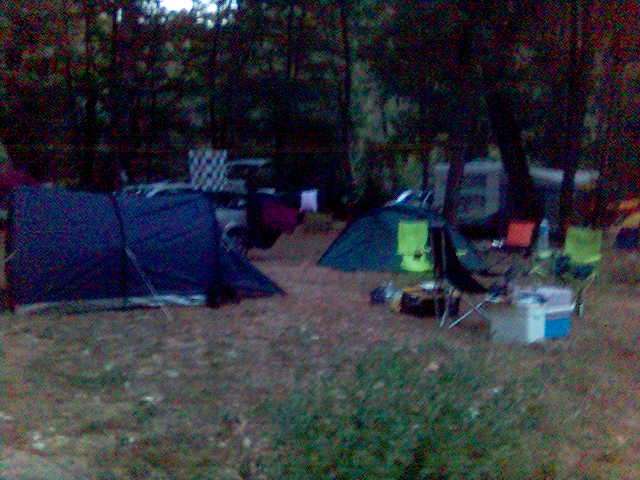 oh lala! ‘eute Abend ‘atten wir ein ge’öriges Unwetter! Sturmböen sind durch’s Tarn-Tal gefegt und haben das Zelt von Andi und Tini (inklusive Tini) fast in den Fluß gerissen. Von Ollis Zelt, dass ich mir für diesen Urlaub geliehen habe und das vorher noch unbenutzt war, sind zwei Bodenlaschen einfach abgerissen. Glückerlicherweise hatte ich vorher schon die gesamte Verspannung angebracht so dass das Zelt nicht auch davongeflogen ist. Vor diesem Ereignis war ich von dem Zelt ganz positiv eingenommen. Nun allerdings muss ich sagen, dass es wirklich zu riskant ist, mit billigen Zelten in den Urlaub zu fahren. Die Nähte und der Stoff (es sind auch noch zwei andere Teile etwas eingerissen) sind einfach nicht stabil genug, um widrigen Bedingungen, wie sie auch in nicht-extremen Klimazonen immer wieder vorkommen, zu widerstehen. Qualität ist gefragt – wenn wir nicht dagewesen wären und es gleichzeitig auch noch geregnet hätte, wäre es schon möglich gewesen, dass das Zelt samt Inhalt (das heisst auch diesem Laptop) völlig hinüber gewesen wäre. Gute Zelte und ordentliche Heringe sind also eine sinnvolle Investition. Auch sinnvoll ist es, bei auch nur ein bisschen zweifelhafter Wetterlage die gesamte Verspannung anzubringen und darauf zu achten, Heringe tatsächlich fest einzuschlagen.
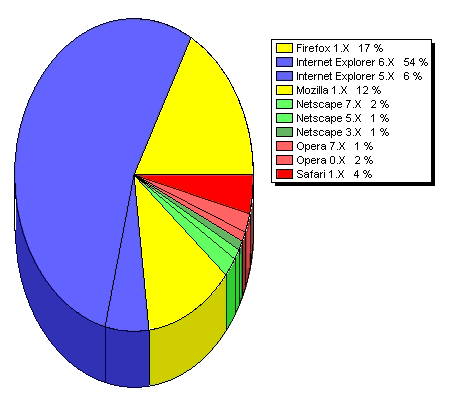 On the diagram you can see a pretty average distribution of browsers visiting my site. Since the free account at