From meaning to sense. Accountability on the hither side of words.

May 21st, 2012

Things start to become exciting. On the upcoming conference Sensory Powers and Urban Lives I will give an introductory presentation. This will be the first occasion to speak about my current book-in-progress, which runs under the working title From meaning to sense. Social science in motion. I am really looking forward to present my thoughts in a setting that represents the place of origin (if there is one) for the whole argument: the sensory experience of built environments and the many modes in which it interacts with and affects the sociology and the politics of everyday life. Here is the abstract for my presentation:

The establishment of social control through the design of built space is marked by pervasiveness. In contemporary urban life one is always embedded in, crossing through and permeated by atmospheres, paths and boundaries. Rarely is this power encountered “Head On”, such as the concrete wall against which the migrant hero of the breathtaking movie of the same name crashes. Usually urban life is shaped by more subtle interactions, by changes in texture, rhythm, smell, opacity etc. These changes as such are subtle not because they are small or imperceptible. They are subtle because they are not recognized as such, they establish themselves below the skin, below the threshold of attention. This interplay of material effects and corporal affect is difficult to put into words. If one tries to “capture” this interplay, to get analytic hold of it and to interpret its meaning – then it coagulates to words, loses its characteristic fluidity and power.

How to deal with the characteristic subtlety of the sensory powers that permeate urban life? The social sciences deal with meaning. They provide tools to dissect the meaning that is negotiated in discourses. They can measure what kind and possibly even how much meaning people ascribe to the terms and constructs that one asks them about. They are caught up in the web of words that they capture and produce at the same time. A slight change in tone, a shift in words, however, can signal important differences. What if the interpretation shifts from the interpretation of meaning, of that which is put into static words, to the interpretation of sense, to the interpretation of moving sensibilities, of directions instead of places? What happens if the work of the researcher does not stop at words and their meaning, if it follows the sense of direction that is embodied in, that is constantly generated in the field that is studied? What kind of access to the sensory powers of urban life can be gained by following the sensory, productive, mobile powers of urban life? How can these powers be evoked instead of captured? How can one take hold of the constant flow of events and still unfold and display its character – without transposing it into a realm beyond everyday life, without just producing words, mere signifiers of entities that are not there, shadows of reality? How can subtle powers be made accountable on the hither side of words?

I am really looking forward to discussing these questions with the audience and the other presenters over the course of the two-day conference, which is generously hosted by and Catharina Thörn.

The Avengers – Whedonesque entertainment without the twist.

May 7th, 2012

Friday I went to the cinema here in Notodden to watch The Avengers. I haven’t seen any of the other Marvell superhero movies except for the 2003 version of Hulk (which stars different actors than the 2008 version that is integrated into The Avengers). As long-time readers know, I am a fan of much of Joss Whedon’s work – Buffy in particular. But the clever sense of humor and the against-the-grain heroes that keep Buffy from being just another wacko teenager-vampire crossover are missing here. We have a pretty much off-the-shelf superhero story, we have a bunch of characters that are not at all explored – and we have a few funny punch lines, special effects and a decent cast. This is good enough for some evening entertainment but it lacks a certain twist… no real human emotions, nothing unexpected in the story. But still, perhaps you’ll find the Hulk’s handling of his main enemy funny enough to chuckle the same way I did.
IMDb entry | trailer

Hugo – pretty. uninspiring.

March 28th, 2012

I don’t get the hype about Martin Scorsese. Every year at the Academy Awards he is presented as if he would be this total genius, a director like no one else. I retain some hope that this undue praise is evoked by him being a nice chap whom people like on a personal level. In that case, I can live with it, even though aesthetically or politically, he doesn’t live up to the hype.

This goes true for the most recent Scorsese film, Hugo, which again reaped a bunch of Oscars. We have a poor orphan, so much for the Dickensian element. But this is not all. We also have a strange world of clockworks and craftmanship, a mysterious automaton and a equally mysterious Gandhi toyshop owner. Of course, the latter soon enough develops father-figure like qualities. No surprise there. Things take a turn for the worse when the movie more and more moves from a story about orphans and automatons to a story about the magic quality of the movies, of early cinema and the wonders it brought to this world. We do now that movie makers like movies. No surprise here. But for me, the shift from the magic of clockworks to the magic of movies felt like a bit of a stretch, there was no real, inner connection between the two.
In any case, there are a few pretty pictures, although less so than I expected after all the awards. I guess the award showers were intensified by the fact that this was a feel-good movie for the movie industry itself – of course members of the Academy like a movie that praises their achievements. In my experience neither the aesthetics nor the story really were moving. Just: moving pictures, some nice ideas, some entertainment.
IMDb entry | trailer

Phänomenologie, Stadt, Abwesenheit.

March 26th, 2012

Wie hier im Blog bereits erwähnt, bin ich in der vergangenen Woche von der Graduate Studies Group des Georg-Simmel-Zentrums für Metropolenforschung an der Humboldt-Universität Berlin zu einem Vortrag eingeladen worden. Der Vortrag hatte den Titel Phänomenologie, Stadt und das Abwesende. Glücklicherweise hat mit der Aufnahme alles soweit geklappt, so dass ich den Vortrag hier zum Anschauen und herunterladen zur Verfügung stellen kann. (Länge: 36 Minuten. Die Tonqualität ist leider nur mäßig, da ich kein separates Mikrofon dabei hatte.)

Gefühlte Stadt – gefühlte Schrumpfung? Zur Phänomenologie der Schrumpfung.

March 16th, 2012

Für die nächste Woche hat mich die Graduate Studies Group des Georg-Simmel-Zentrums für Metropolenforschung zu einem Vortrag zum Themenbereich Phänomenologie der schrumpfenden Städte eingeladen. Die von Inga Haese vorbereitete Veranstaltung spricht ein wichtiges, gleichsam auch poetisches Thema an, das ich vorher noch nicht aus phänomenologischer Perspektive betrachtet hatte. Das Leben in schrumpfenden Städten bietet in der Tat eine Vielzahl spannender, das Erleben und Erfahren betreffender Aspekte die der Untersuchung harren. Besonders relevant und aus meiner Perspektive passend erscheint mir das Phänomen der Abwesenheit, zum dem ich in den letzten Monaten viel geforscht und gearbeitet habe. Dementsprechend widme ich mich in meinem Input unter dem Titel Phänomenologie, Stadt und das Abwesende neben grundsätzlichen, die Phänomenologie betreffenden Fragen vor allem der Erfahrung des Abwesenden. Hier mein Vortragsabstract:

Phänomenologisches Forschen folgt Husserls berühmten Aufruf Zurück zu den Sachen selbst. Hier soll der Frage nachgegangen werden, was eine solche Perspektivierung für die Stadtforschung bedeutet und wie dabei insbesondere dem Phänomen der schrumpfenden Städte nachgegangen werden kann. Dazu wird in einem ersten Schritt anhand von Videomaterial gezeigt, wie die Erfahrungsebene bzw. das Wahrnehmen für wissenschaftliche Reflexion greifbar gemacht werden kann. Im sich-bewegen durch den Stadtraum wird dieser in jeweils bestimmter Weise hervorgebracht. Dabei spielen die Körperlichkeit bzw. Leiblichkeit der Wahrnehmenden genauso eine Rolle wie die sozial-räumlich-materielle Konstellationen, durch die man sich bewegt. All diese Faktoren prägen das Wahrnehmen und damit auch das Handeln im Stadtraum – das Perfide daran ist allerdings, dass die Beeinflussung des Wahrnehmens selbst normalerweise nicht wahrgenommen wird und deshalb auch nicht als Gegenstand für eigene Einflussnahme auftaucht. So wird durch die Konfiguration des Wahrnehmens auf subtile Weise eine äußerst wirksame Kontrolle über das Handeln ausgeübt.
Im einem zweiten Schritt sollen diese theoretischen genauso wie methodischen Überlegungen auf das Phänomen der Schrumpfung gewendet werden. Dabei wird die Abwesenheit im Mittelpunkt stehen. Wie wird Abwesendes eigentlich erfahren? Was ist die besondere Qualität des Abwesenden? Häuser die Erdboden gleichgemacht wurden, Geschäfte die leerstehen, Stühle die von niemandem besetzt werden… alle diese Leerstellen müssen gefüllt werden. Aus eben dieser Notwendigkeit des Füllens bezieht das Abwesende seine Kraft: das, was fehlt, wird mit den Erinnerungen und Emotionen derer angefüllt, die es vermissen. Die schrumpfende Stadt wird so zu einem Ort, dessen Fülle sich aus denen speist, die ihn erfahren haben – oder zu einem Ort der einfach nur leer bleibt, weil keine Erinnerungen und Emotionen mit ihm verknüpft sind.

Mehr Informationen zur gesamten Veranstaltung, die viel Raum für Austausch und Diskussion bieten wird, gibt es in der Veranstaltungsankündigung – ich freue mich schon sehr auf die Diskussionen. Besonders charmant finde ich die Tatsache, dass das Georg-Simmel-Zentrum in den ehemaligen Räumlichkeiten meines ehemaligen Arbeitgebers, nämlich des Max-Planck-Instituts für Wissenschaftsgeschichte in der Mohrenstraße angesiedelt ist – das gibt ein wenig Heimatgefühl! Also, kommt Mittwoch den 21. März um 19:00 Uhr zur Mohrenstraße 41!

Iron Lady – the individual, not society.

February 14th, 2012

In a way, the movie about Margaret Thatcher’s life takes up one facet of her political stance and bases the whole plot of the movie on this one aspect: the role, the power of the individual. Margaret Thatcher, the Iron Lady, is depicted as the daughter of a politically ambitious and conservative father who runs a grocery store. But what else is there, of the stuff that society is made of? We get one or two scenes hinting at the fact that there was a war sometime when she was younger. But what else, other than Margaret Thatcher, or should I rather say Meryl Streep? What do we see about society and its role in Margaret Streeps life? Not much. The one thing that the movie makes clear is that politics (and the upper strata of the economy) are male and that it takes more than a little courage to enter this male, upper class world as the daughter of a grocer. (Ignorance, for example, is helpful.) What we see is a single individual who works her way through resistances and over obstacles. Not one of many women. A strong individual moving towards her goal, ignoring everything around her.

This is nothing new, and we would have expected little else from Meryl Thatcher. But the main problem for me was, that this everything around her remains on the periphery. The miners’ protests, her family, the changing world at large – they all remain in the background, glance off, seemingly unimportant. The sole exception is: a ghost. The ghost of her husband, who keeps haunting the ageing Stratcher, offering charming glimpses at a life that has just passed by.

In a way, as I wrote above, the movie is consistent. It focuses on a person, only showing the world as this particular person might have seen it. I guess this is legitimate, as MT is indeed special. But. In a case where the hero is anti-social and has had a huge impact on the lives of millions of people, I find it relevant to also show this impact, show how it is ignored, where all the filters are set up that such people use to phase out these parts of reality from their view on the world. (Well, we do get a small glimpse on this when the Falklands War comes up – but again only from her limited perspective.)

Other than that, I have to make a disclaimer and tell you that I am not a huge fan of Meryl Streep. This added to my discomfort, as I also saw the movie as building on the star cult around Streep, with a cinematography that too often focused on the great actress, with long shots of her face, putting her in a position to get just another Oscar, or at least the zillionth nomination for an Academy Award – which can then be used in the further marketing of this movie.
IMDb entry | Trailer

Zurück zu den Sachen selbst! Zu Widerständen, Zwängen und Freiheiten bei der Methodenwahl.

February 9th, 2012

Unter dem obigen Titel werde ich auf dem 7. Treffen des Nachwuchsnetzwerks Stadt–Raum–Architektur einen Vortrag halten. Das Treffen findet unter dem Motto Mythos Methodologie statt. Deshalb werde ich versuchen, in meinem Vortrag einigen der mythischen Qualitäten der Methodologie die Welt der Sachen selbst gegenüberzustellen. Hier das Abstract zum Vortrag:

Wir Forschenden werden immer wieder, gleichsam unaufhörlich, mit dem Problem konfrontiert wie wir uns den Gegenständen, bzw. Problemen, die uns interessieren nähern können, wollen oder müssen. In diesem Vortrag möchte ich versuchen, die unterschiedlichen Zwänge zu thematisieren, die in diesen Konfrontationen eine Rolle spielen. Von der Einbettung in eine jeweils spezifische akademische Gemeinschaft (und bestehe sie auch nur aus Doktorandin und Doktormutter) über die methodischen Fertigkeiten, die man sich im Studium aneignen konnte (oder wohl häufiger: nicht aneignen konnte) bis zu den Herausforderungen, die aus der eigenen Auseinandersetzung mit dem zu untersuchenden Problem selbst entstehen. All diese unterschiedlichen Faktoren und noch andere mehr zerren und schieben an einem herum und führen zu einer grundlegenden Verunsicherung in Bezug auf die Methodenwahl.
Eins ist sicher richtig: all diese unterschiedlichen Ansprüche lassen sich nicht aus der Welt schaffen. Ziel dieses Vortrags ist allerdings nicht, die unterschiedlichen Aspekte als mehr oder minder gleiches Für und Wider zu präsentieren. Im Gegenteil, der Vortrag ist ein entschiedenes Plädoyer für die Orientierung auf die Sache selbst hin. Sie, auch wenn ihre Ausrichtung und Gestalt noch unklar sein mag, sollte das sein, was es selbstkritisch zu bearbeiten gilt. Entsprechend soll es darum gehen, welche Strategien und Taktiken es den Forschenden ermöglichen, sich möglicherweise gegen den Widerstand anderer Faktoren für Methoden zu entscheiden, die ihrer Forschungsmotivation Rechnung tragen und nicht Konventionen oder technischen Zwängen. Ob es sich bei den in Frage kommenden Methoden um ein standardisiertes Survey mit anschließender multivariater Analyse zu einer Frage handelt, die wirklich unbedingt beantwortet werden muss, oder um eine leibphänomenologische Auseinandersetzung mit Kindheitserinnerungen an Straßenbäume ist weniger wichtig, als die Suche nach den Methoden, die sich mit der eigenen Forschungsmotivation in Deckung bringen lassen. Konkret soll diese Problematik anhand von Forschungsentscheidungen untersucht werden, die sich in meiner Forschungsarbeit sowohl an »Herzensprojekten« als auch im Rahmen von Auftragsforschung ergeben haben.

Erfahrungsgemäß ist die Stimmung bei den Nachwuchsnetzwerktreffen immer sehr produktiv, so dass ich mich wirklich auf Weimar und die dortigen Diskussionen freue.

Sociosophy with a beating heart.

February 6th, 2012

I have ogled Michel Serres’ The Five Senses for a long time already. (I must say I am shocked to see that it has been translated into English only in 2008, 23 years after its original publication and 15 years after the German translation.) The title always seemed neat to me, the German subtitle Eine Philosophie der Gemenge und Gemische did so too, and who does not want to demonstrate academic sovereignty with even more Suhrkamp Verlag publications on his or her bookshelf? But it took a reviewer to finally push my nose into the pages of this book – I am writing about fog in an article on absence, and Serres dedicates one of the subchapters of his book to fog…

So today, after reading all the Derrida that this and another reviewer also condemned me to, I finally opened my Five Senses and started to read, my eyes still blurry from staring their way through contorted Derridean sentences. Even before turning pages for the second time, I suddenly realized that my heart was beating loudly. Not just beat, hammer in excitement and anxiety about the next sentence. This is philosophy? I say! Or rather, my heart says: it might be much more than that.

Usually, I might furrow my brows, sometimes sigh or smirk my way through a book on theory or philosophy. Sometimes I might even smile or find that expression of realization or, even better, of wonder on my face. But a thrilled, beating heart? This definitely is a new experience. If only for that: I must recommend reading this book. I have only finished the first subchapter and started on the second one, but if you might be interested in an example of extraordinary writing in academica, then go out and get this book. And don’t wait too long until you start to read it!

Breathe snow.

February 2nd, 2012

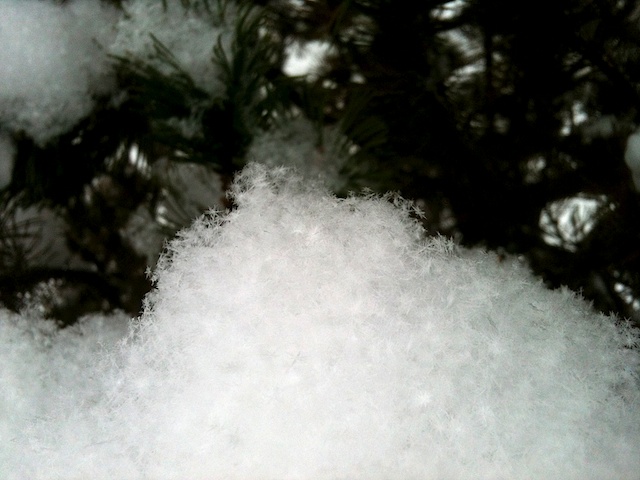
Today I’ve seen the lightest and most ethereal snow ever. Even a tender breath would have blown this pillow of snowflakes apart…
Telemark.

January 30th, 2012

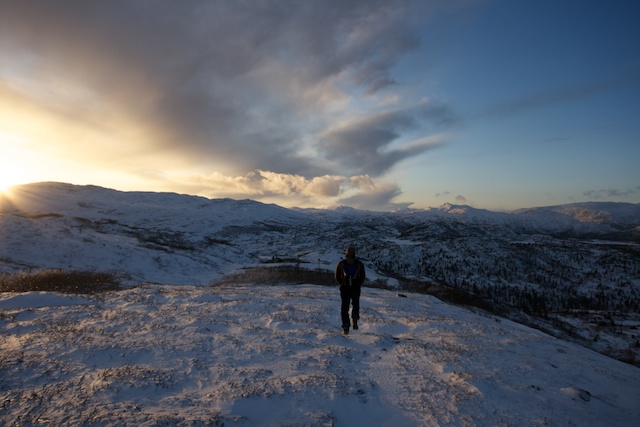
It’s a new job for a new year. After finishing work on the project Geodata, Policing and Urban Development at the University of Hamburg, I have moved back to Norway. To be more exact, I am now a resident of Notodden in Telemark province. Telemark? Yes, Telemark, the home of skiing. Accordingly, two things dominate my life: (a) work, which means publishing articles and developing social science courses for foreign students at Telemark University College. (b) Hiking (before all the snow arrived) and now skiing. Hardangervidda is only a short drive from here, so it looks like this year’s skiing season may well extend deep into April or perhaps even May. Y… I say!

Habermas – Luhmann. The clash of the last titans.

November 16th, 2011

This was the title of my trial lecture for the job interview at the department of sociology at the Norwegian University of Science and Technology (NTNU) in Trondheim. I really enjoyed to go back to my sociological roots and prepare this 45 minute lecture, which I built on the well-known conflict between Jürgen Habermas’ theory of communicative action and Niklas Luhmann’s systems theory. If you want to take a look at the slides, you can do so. I have prepared one set as a PDF document (including my commentaries that I used as cues for my talk) and another set as a QuickTime movie (you have to click into the movie to advance to the next slide – there is no audio track, however).

The Adventures of Tintin – entertainment with a weak finish.

November 13th, 2011

A new town, a new cinema. Here in Notodden, deep in the Norwegian province, we might have only 12,000 inhabitants, but we also do have a 3D capable cinema that is only a short stroll away from home. So we can hope for a return to more regular film critiques – if the program allows that is… Still, we’ll have plenty Hollywood-style entertainment flicks and Tintin certainly belongs to this category. I do like the comics, and I found the movie to be an adequate conversion to the screen, 3D and all. The first half or even two thirds were actually very nice. Small episodes, chase scenes that were actually enjoyable, a bunch of likable if somewhat shallow characters and, of course, Captain Haddock and his addiction to alcohol as pretty much the only interesting character. However, the movie just went on like that: more chases, more adventure, no development, no conflict. I guess the same is true for the comics, so there is not much to complain about, but in the realm of animated movies, this is not nearly sufficient to even get close to Pixar’s productions. Too bad. But sadly, I do not really expect more from a Steven Spielberg movie, so I at least wasn’t disappointed. You can certainly go see it if you’re into Tintin.
IMDb entry | Trailer

Routes book is out – toilets await.

October 27th, 2011

Finally the book that accompanies the research project Routes, Roads, and Landscapes: Aesthetic Practices en route 1750–2015 has landed on my desk. You can peruse the table of contents and read the introduction at the publisher’s website.
book cover
The book is in an unusual format, as you can see from the image. The landscape format (haha) works really well for this, as it obviously should. What is even better, we invested the rest of the project’s funds to get the book produced with full color photographs, so that you can see the toilet buildings that feature in my article Stop, rest, and digest. Feeding people into nature in their full glory!

As with all Ashgate hardcovers, the price is much too high for individuals to pay (125 US$). So the best way to get your hands on this volume is to tell your library staff that this is a book that you would like to read and that is relevant for the library’s collection.

Gestärkt.

October 25th, 2011

Zum Monatswechsel ist meine Zeit an der Universität Hamburg abgelaufen. Zeitverträge sind besser als gar keine Verträge, aber sie bieten keinerlei Sicherheit, keinen Halt in Zeiten unsicherer Zukunftsaussichten am akademischen Arbeitsmarkt. Wenn einem der Arbeitsmarkt keinen Halt bietet und das Leben deshalb auch keinen festen Ort findet, ist es um so wichtiger, auf andere Weise den sonst bald arg gebeugten Rücken gestärkt zu bekommen. Sonst wird man irgendwann so krumm, dass man sich gar nicht mehr aufrichten und anderen in die Augen blicken kann.

Glücklicherweise hat sich diesen Monat bei zwei Gelegenheiten gezeigt, dass das Wagnis meiner Dissertation bzw. der dazugehörigen Buchveröffentlichung sich gelohnt hat. Sowohl auf der 3. Tagung des Atmosphärennetzwerks in München als auch auf der Konferenz Materialitäten in Mainz bin ich jeweils von mehreren Leuten angesprochen worden, die mein Buch gelesen haben und denen es sehr gut gefallen hat. Das ist ein fantastisches Erlebnis und gibt einem Mut. Ich interpretiere diese Rückmeldung so, dass es sich lohnt, offen zu sein, Risiken beim Schreiben einzugehen und sich nicht vorschnell vermeintlichen Standards des wissenschaftlichen Arbeitens und Schreibens unterzuordnen, sondern in jedem Fall auf’s Neue zu entscheiden, was man wie ausdrücken kann und will – und auch mögliche Schwächen des eigenen Arbeitens einzuräumen. Das mag einem nicht unbedingt sofort Anerkennung und einen Job verschaffen, beim Peer Review habe ich damit auch noch keine guten Erfahrungen gemacht, aber es ist besser, richtiger und vermutlich auch wahrer.

In gewisser Weise habe ich die Arbeit von Anfang an aus meiner Perspektive bzw. aus Perspektive meiner Generation geschrieben – nämlich aus einer deutlich spürbaren Unzufriedenheit mit der wenig selbstkritischen und sich dabei um so wissenschaftlicher gerierenden etablierten Sozialforschung in Deutschland. Ich hatte dabei wichtige Mitstreiter im Graduiertenkolleg und einen für Experimente offenen Doktorvater, ohne die ich den Mut für die Arbeit, wie sie jetzt steht, nicht aufgebracht hätte. Das hilft aber alles wenig, wenn die Arbeit erst einmal vom Tisch, der Titel verteidigt und die Postdocstelle ausgelaufen ist.

Dann wird es um so wichtiger, wenn einem Andere mit ihrem Lob den Rücken stärken. Das waren zuerst die anderen Jungen und das sind auch immer noch und vor allem: Doktorandinnen, Masterstudenten, frischgebackene Doktorinnen. Für sie und mich habe ich diese Arbeit geschrieben. Ihre positive Rückmeldung ist mir am wichtigsten. Allerdings kann ich nicht verhehlen, dass es in einer derart prekären Lage auch wichtig wird, die frohe Kunde darüber hinaus von Leuten mit grauen Schläfen und eigenen Büros zu hören – das ist auf den vergangenen beiden Tagungen eigentlich das erste Mal passiert und das gibt mir Hoffnung, dass sich die Arbeit an den Wurzeln auch langsam in den mehr oder weniger welken alten Ästen und Baumkronen bemerkbar macht.

Mal schauen, wie es weiter geht. Bis dahin möchte ich mich in voller Ernsthaftigkeit bei allen bedanken, die mir Lob ausgesprochen und mir so Mut gemacht haben – ohne das würde ich nicht so weitermachen können. Danke.

Impressive landscapes. Entanglements of nature and culture.

October 14th, 2011

The end of the road. This was the name of the symposium that ended the research project that I was involved in beginning in 2009. The symposium reflected the contents and the atmosphere of the project in an excellent way and I was very happy to be able to present my contribution to the project as well. The presentations were done pecha kucha style, to keep them short but also visually rich. Since the material that I collected for my research has great visual strength, this format suited me so well that I decided to make a recording and put the presentation online. I hope you enjoy it!

(Thanks to Andi Schmidmeister and Kerstin Bornholdt for the company and the reflections that they offered during our trips to Hereiane and the Stegastein platform!)

Sounds of … something. Negotiating noises and voices.

August 1st, 2011

Fall is conference season, and this year is no exception. I am very happy that my submission for the 3rd International Ambiances Network Conference & Workshop in Munich (October 6th – 8th) has been accepted. The title of the conference is Urban Design & Urban Society. The emergence of urban atmospheres between design practice and social invention. My contribution has been placed into the October 8th session called Resisting bodies: provoking atmospheres, which should fit the profile of my presentation really well. As the organizers (Rainer Kazig, Monika Popp and Damien Masson) are known for their ability to create productive and stimulating sessions, I am quite sure that we’ll have some excellent discussions in Munich.
The title for my presentation is Sounds of … something. Negotiating noises and voices, following you can read the abstract:

Urban spaces are permeated by sounds. Machines, people, animals, the elements – they all contribute to one of the more difficult to grasp aspects of urban life. In this presentation I will focus on the sounds that I recorded in the context of videotaping different spaces of mobility. I will pay particular attention to how sound establishes atmospheres both through its presence and its absence. The day-night cycle of a railway terminal, for example, produces strikingly different soundscapes. Practices that would get lost during the bustle of the rush hour easily capture the attention of the few who are present during the quiet hours, when night has fallen. To gain attention during the busy times, people and things need to produce sounds of a much higher volume or suddenness, while even a slight change in tune might become perceivable at other times.

These soundscapes are not just passively consumed, they are negotiated with acuity and in interaction with others who are either co-present – but sometimes they are also produced in relation to a perceived absence. It is these negotiations that are at the heart of my presentation. How do people use their voice or other sounds that they produce to establish territories, to influence the way they and the space through which they move are perceived by others and themselves? How do people display attention to or ignorance of specific sounds which they might deem to be inappropriate or not worthy of attention? How are other spaces established through sound?

All of these questions also relate to the question of resistance in urban space. Two aspects of resistance or urban critique are particularly problematic or open to interpretation in this context: on the one hand, many tactics employed by those seeking to critically relate to atmospheres as they are commonly established in controlled and commercialized urban spaces have limited impact because they are just that: tactics. Understood with de Certeau, they offer limited control over time, but almost no control over space. They appear and quickly fade away. Just as sounds do. But maybe they will leave an echo? This question leads to the other aspect: in how far are the soundscapes of resistance the stratified practices of a specific group of people that distinguishes itself from the masses of consumers through their specific taste, for example through ironic references to mass taste, or through references to aesthetics that are only accessible for those who are socialized to place themselves in the upper strata of the cultural field? Answering this second question is necessary if one wants to understand the multiple ways in which the urban experience is negotiated by all the different participants – how normality is challenged and by whom; and how far sounds can leave echoes in urban space and in the corporeality of its inhabitants that might be evoked at other times and in other places too.

Materialität in Bewegung.

July 31st, 2011

Allmählich gewinnt das Vortragsprogramm für den kommenden Herbst an Kontur: am 19. und 20. Oktober werde ich zur Konferenz Materialitäten – Herausforderungen für die Sozial- und Kulturwissenschaften [PDF] einen Vortrag präsentieren. Das ist besonders erfreulich, weil den Organisatoren mehr als 140 Vortragsabstracts geschickt wurden (vermutlich auch weil es Keynotes von so bekannten Leuten wie Bruno Latour, Janet Hoskins und Peter-Paul Verbeek gibt) und sie deswegen sehr stark aussieben mussten. Mein Vortrag wird sich unter dem Titel Materialität in Bewegung mit einer der Kernfragen für mein zweites Buch beschäftigen. Hier das Abstract:

Ausgehend von Detailstudien an so unterschiedlichen Ortstypen wie Bahnhöfen, Stränden, Krankenhäusern und Rastplätzen wird in diesem Vortrag mit Hilfe von Fotografien, Video- und Tonmaterial der phänomenologischen Gewalt des Materiellen nachgegangen. In verschiedenen Alltagspraktiken zeigt sich bei genauer Betrachtung, wie die stoffliche Welt und das menschliche Handeln untrennbar miteinander verwoben sind. Diese Verwobenheit ist Ausgangspunkt für eine grundlegende Reflektion oftmals unhinterfragter soziologischer Kategorien:
Zum einen rückt bei der hier vorgenommenen Auseinandersetzung mit der Materialität der Welt der Zusammenhang von Wahrnehmen und Handeln in den Fokus. Anstatt beides als voneinander getrennte Prozesse zu betrachten – entweder zeitlich als aufeinander folgend oder analytisch als unterschiedlichen Regeln gehorchend – wird hier der Vorschlag gemacht, Wahrnehmen und Handeln als auch im kleinsten Detail ihres Vollzugs miteinandergehend zu denken. In dieser Verknüpfung wird dann auch deutlich, wie Materialität auf subtile, kaum bemerkbare Weise Eingang in soziales (Wahrnehmungs)Handeln findet und so zur Herstellung von sozialer Ordnung genauso wie zu Prozessen sozialen Wandels beiträgt.
Zum anderen führt ein sich Einlassen auf die Herausforderung der Materialität an die Sozialwissenschaften dazu, die geläufige Fassung der Kategorie des Sinns zu hinterfragen. So wird Sinn in der Regel als Bedeutungssinn bzw. mit Weber als gemeinter Sinn gefasst, den es auf mehr oder weniger hermeneutischem Wege zu interpretieren gilt. Mit dieser geisteswissenschaftlich geprägten Bezugnahme aber wird die Materialität als Jenseitiges behandelt, das einer anderen Sphäre angehört. Um dieser Aporie zu entgehen, wird es nötig, die Sprachfixierung der soziologischen Interpretation aufzulösen. Deshalb der Rückgang auf das Material, das diesem Vortrag zu Grunde liegt: Videos, Bilder, Töne. Mit Unterstützung dieser epistemologischen Verbündeten mit ihrer ganz eigenen Evidenz und in Anknüpfung an Überlegungen aus Science and Technology Studies (Latour, Pickering), britischer Humangeografie (Thrift, Ingold) und aus der Phänomenologie (Merleau-Ponty, Waldenfels) soll die Kategorie des Sinns anders angegangen werden: weniger als Bedeutungssinn sondern vielmehr als Richtungs- oder Bewegungssinn. So gedacht kann Materialität – nämlich Materialität in Bewegung – auch sinngebend sein. Störungen, Verfall, Turbulenz und Erosion treten in dieser Perspektivierung aus dem geschlossenen Bereich des Natürlich-Objektiven heraus und zeigen sich auch auf kategorialer Ebene in ihren sozialen Qualitäten.
In dem Zusammenspiel von Wahrnehmungshandeln und Bewegungssinn zeigt dieser Vortrag die doppelte Herausforderung der Materialität auf: Zum einen liegt diese Herausforderung in der Notwendigkeit von Kategorien, die diesseits der Trennung von Subjekt und Objekt operieren. Zum anderen liegt diese Herausforderung in der methodologischen Umorientierung weg von einer von allen Störungen gereinigten Fokussierung auf Sprache und Versprachlichung und hin zu einer komplexeren Orientierung auf das Zusammengehen von Körperlichkeit, Bewegung, Fühlen und Zeigen.

Hamburg, crime and geodata.

April 25th, 2011

Re-settling in Hamburg and getting started into a new research job took eat up too much of my time to let me post here for a while. But the news are good: I have a half-year full position in a research project at Hamburg University’s Institute for Social Scientific Criminological Research. The project on which I am working has been designed by Jan Wehrheim and Susanne Krasmann, and it is funded by the Thyssen Foundation. The name of the project is Geodata, Policing and Urban Development. I hope that I’ll have the time to post some more info on the project itself and what we are doing. Until then I am happy to be working with great new colleagues, living close to friends and family, and spending the summer in Hamburg.

Aufmerksam werden.

January 31st, 2011

Ende der vergangenen Woche habe ich an der 8. Tagung der Neuen Kulturgeographie teilgenommen. Auch wenn ich als disziplinärer Außenseiter etwas den Eindruck hatte, dass die Neue Kulturgeographie den Label neu vielleicht ablegen könnte, so heißt das jedenfalls nicht, dass die Tagung nicht allerlei interessante Perspektiven geboten hätte. Ich jedenfalls habe in jeder Sitzung, an der ich teilgenommen habe, mindestens einen spannenden Vortrag gehört, was mir gar keine schlechte Ausbeute zu sein scheint. Insbesondere bin ich dafür dankbar, dass ich – ohne dort wirklich Leute zu kennen – schnell Anschluss gefunden habe und freundlich aufgenommen worden bin. Ein paar Gesichter kannte ich zwar schon über die Konferenzen der Royal Geographical Society, aber so groß ist die Überlappung mit der britischen Geografie-Szene anscheinend nicht.
Besondere Freude hat mir die Einladung zur Teilnahme an der von Martin Müller geleiteten Sitzung bereitet. Unter dem Titel Mittendrin statt nur dabei: Ethnographie als Methodologie für die Neue Kulturgeographie gab es vier verschiedene Präsentationen zum Themenfeld Ethnografie, die sich untereinander hervorragend ergänzt haben. Ich konnte mich in meinem Vortrag unter dem Titel Aufmerksam werden… Zur phänomenologischen Auseinandersetzung 
mit Dingen, Anderen und sich selbst mit der Rolle der Phänomenologie in meinem ethnografischen Arbeiten auseinandersetzen und dabei weiter über die Möglichkeiten reflektieren, die das Arbeiten mit Videoaufzeichnungen mit sich bringt. Auch die Diskussion in der Sitzung war sehr angenehm und produktiv. Leider allerdings habe ich es dieses Mal verpasst, einen Mitschnitt von meiner Präsentation zu machen, beziehungsweise ich habe den Mitschnitt aus Versehen gelöscht… Deswegen kann ich jetzt leider nur die Folien ohne meinen Vortrag als QuickTime Film zur Verfügung stellen. Der Film spielt sich nicht von alleine ab, man muss sich von einem Präsentationschritt zum nächsten klicken – was allerdings auch den Vorteil hat, dass man die Sache in seinem eigenen Tempo verfolgen kann. Hier also die Filmdatei im .mov Format: Aufmerksam werden… [27 MB].

Mapping my bibliography.

November 26th, 2010


This is the output that Bookends, my bibliography software, produces when I tell it to create a tag cloud based on the 100 most frequently used keywords in my ~1500 entry bibliography. It is a nice visual indication of my research interests. I like it so much that I am thinking if I couldn’t include this little treat in my applications, to attract those with a more visual approach.